Introduction
Modern casino floors operate with chip inventories that span dozens of denominations, multiple table games, and rotating cashier cages. Managing this complexity with manual counts and visual inspection introduces operational risk, reconciliation delays, and shrinkage exposure. Radio frequency identification (RFID) technology has become the standard architecture for tracking gaming chips across their entire lifecycle, from issuance at the cage to collection at the table. This article examines how RFID-enabled chip management addresses the specific challenges of multi-denomination chip sets and how operators can design a deployment that scales with the size and sophistication of their floor.
The Challenge of Multi-Denomination Sets
A single property may operate several hundred thousand chips across denominations that range from low-value tokens used for slots and keno to high-value plaques reserved for VIP baccarat and private gaming salons. Each denomination carries a distinct monetary weight, a distinct color and edge-spot pattern, and a distinct security profile. In a manual environment, cage attendants and table dealers must identify denomination by sight, which is slow and error-prone during peak volume. Miscounts at a busy table translate directly into accounting discrepancies and potential exposure to fraud.
Multi-denomination management also complicates chip float planning. Floats must be balanced so that each table receives the right mix of denominations for its game type and expected traffic. Without automated visibility, cage managers rely on spreadsheets and periodic physical counts, leaving blind spots between audits. RFID closes these blind spots by making every chip individually addressable and continuously countable, regardless of whether it is in play, in a tray, in transit, or in the vault.
RFID Chip Architecture
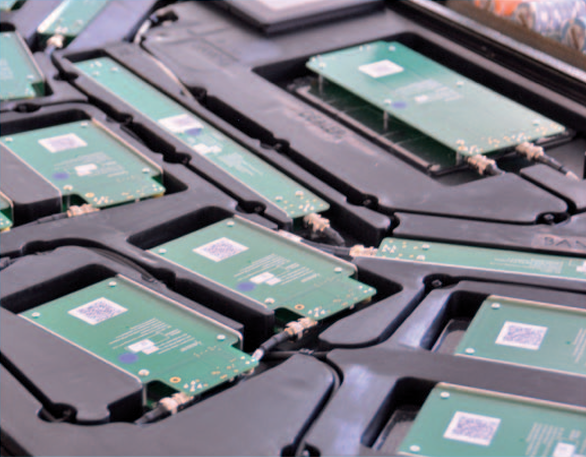
An RFID gaming chip embeds a transponder inside the mold during manufacturing. The transponder stores a unique identifier that is cryptographically associated with the chip’s denomination, issue date, and property code. There are two principal radio technologies used in casino-grade chips. Low-frequency (LF) 125 kHz proximity coupling supports short-range, high-accuracy table reads. High-frequency (HF) 13.56 MHz near-field communication supports cage and counting-station throughput.
LF systems offer excellent performance in the presence of metal and moisture and are well suited to embedded table antennas that read chips stacked in racks. HF systems support faster bulk reads and anticollision protocols that allow hundreds of chips to be counted in seconds at a counting station. Many properties deploy a hybrid model, using LF at the table for live bet detection and HF at the back of house for inventory and reconciliation. This division of labor matches each technology to the operational demand it serves best.
Denomination Encoding and Data Model
The core of multi-denomination management is a clean and authoritative data model. Each chip identifier maps to a denomination record in the casino management system. This mapping must be immutable and centrally governed. Best practice is to store denomination as a reference value in the backend rather than trusting the chip’s on-board memory alone, so that a compromised chip cannot masquerade as a higher denomination. The RFID layer provides the identifier; the management system provides the authoritative value.
Operators should design the data model to support multiple denominations per chip family, regional property codes for multi-site operators, and lifecycle states such as active, retired, in-repair, and quarantined. A well-structured model allows a single cage interface to handle chips from several properties without ambiguity. It also simplifies regulatory reporting, because every movement of a chip can be tied to a denomination and a timestamp.
Table-Level Bet Detection
At the table, embedded antennas read the denomination of every wager in real time. The table controller aggregates chip reads into a bet total and compares it against the game logic. This enables automated settlement verification, removes reliance on dealer estimation, and provides a continuous audit trail of wagers. For multi-denomination games, the system can distinguish a stack of mixed chips and report the precise composition, which is critical for accurate drop and count reconciliation.
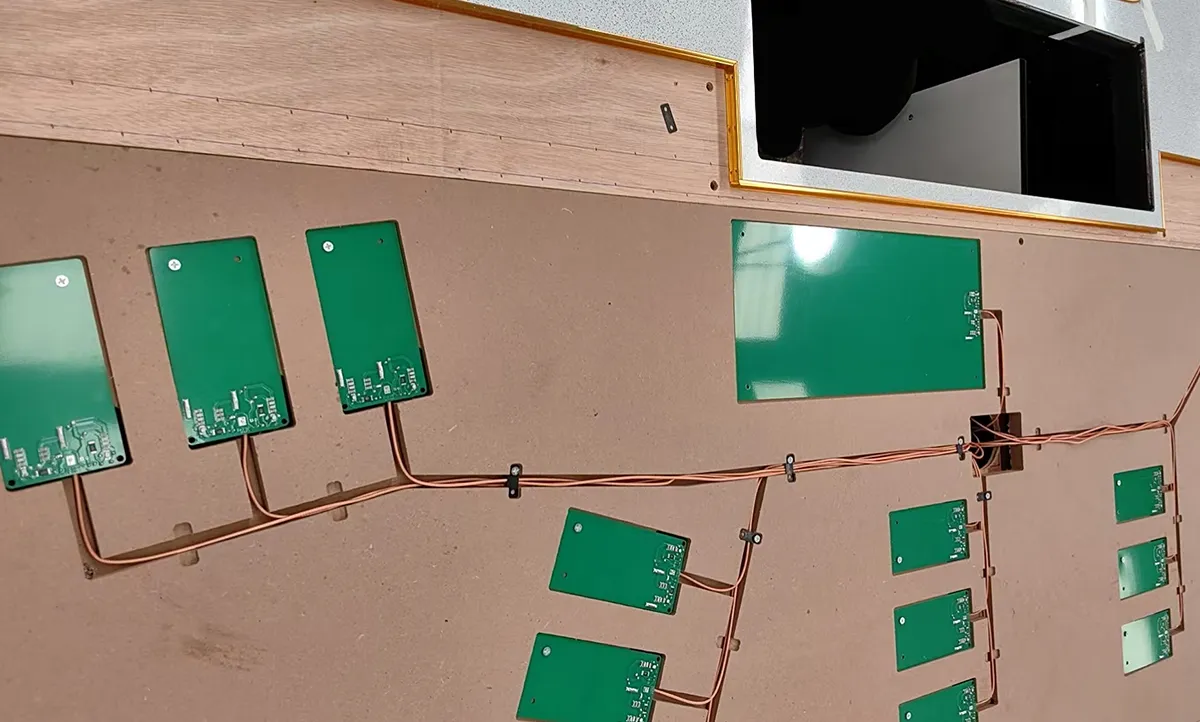
Table-level reads also support live floor intelligence. Management can see, in real time, which denominations are concentrated at which tables, enabling dynamic float rebalancing. When a table runs low on a specific denomination, the system can flag the cage to dispatch a top-up before play is interrupted. The result is a floor that self-corrects its chip distribution rather than waiting for end-of-shift counts Smart Casino Chip Management.
Cage and Counting Station Workflows
At the cage, RFID counting stations authenticate and tally chips as they move between the floor and the vault. Incoming drop bags are scanned in bulk, and the system reconciles the scanned count against the table-reported drop. Discrepancies are flagged for investigation rather than discovered days later during a manual audit. This shift from periodic to continuous reconciliation reduces the window in which errors or losses can accumulate undetected.
Counting stations also streamline the retirement and reissue process. Chips nearing end of life are scanned, marked retired in the backend, and removed from active circulation. New shipments are enrolled at the station, binding physical chips to the property’s denomination table before they ever reach the floor. The enrollment step is essential: it is the moment at which a physical object becomes a tracked financial instrument in the system of record.
Integration with Casino Management Systems
RFID chip data is most valuable when it flows into the broader casino management system, player tracking, and accounting modules. A standardized integration layer exposes chip events such as issuance, table movement, drop, count, and retirement through secure application programming interfaces. This allows finance teams to produce automated reconciliation reports and operations teams to monitor float health without manual intervention.
Integration design should emphasize idempotent event handling, audit logging, and role-based access control. Chip movements are financial movements, and the system of record must be tamper-evident. A practical integration also accounts for network partitions: table and cage readers should continue to operate and buffer events locally when the central link is unavailable, then reconcile automatically when connectivity returns.
Security and Anti-Counterfeiting Considerations
Multi-denomination sets are attractive targets for counterfeiting because a single forged high-denomination chip carries significant value. RFID adds a hardware root of trust. Each transponder carries a unique, factory-programmed identifier that is difficult to clone at scale. Combined with physical security features such as UV ink, microtext, and embedded security threads, RFID forms one layer of a defense-in-depth strategy.
Detection of cloned or rogue transponders relies on anomaly monitoring. A chip identifier that appears at two tables simultaneously, or a denomination value inconsistent with the physical chip, triggers an alert. These patterns are far easier to surface when every chip is continuously read rather than inspected intermittently by hand.
Performance Metrics and Acceptance Testing
Before a property-wide rollout, operators should define explicit performance targets. Read accuracy under stacked and moving conditions is the primary metric, with typical acceptance thresholds exceeding 99 percent. Acceptance testing should measure performance during realistic gaming scenarios, including mixed-denomination stacks, rapid dealer handling, and partial antenna coverage. Environmental factors such as nearby metal furniture and moisture should be included in test conditions.
Throughput at counting stations is a secondary metric. The system should clear a full shift drop within a defined window so that cage operations are not bottlenecked. Documenting these metrics during pilot and holding the deployment to them protects the operator from accepting a system that looks good in a demo but fails under load Macaumr Gaming Technology.
Lifecycle Management
RFID makes chip lifecycle management a continuous process rather than a periodic chore. Chips move through states from enrollment to active circulation, to maintenance, to retirement. Each transition is recorded, producing a complete provenance history for every chip. This history supports loss investigation, counterfeit tracing, and capital planning, because operators can see exactly how long chips remain in service and where they are lost most frequently.
Retirement workflows should be tightly controlled. Retired chips must be physically destroyed or securely stored, and their identifiers must be invalidated in the backend so they cannot re-enter circulation. A disciplined lifecycle process is what keeps the RFID system trustworthy over years of operation.
Deployment Planning
A successful deployment begins with a denomination inventory and a mapping of chip flows across the floor. Operators should pilot RFID at a subset of tables and the cage before property-wide rollout, validating read accuracy under real gaming conditions. Read-rate targets should be defined up front, and acceptance testing should measure performance against those targets with representative chips and dealers.
Staff training is equally important. Dealers, cage attendants, and surveillance personnel need a shared understanding of how RFID changes their workflows and what alerts mean. Change management, not hardware, is frequently the deciding factor in adoption success. Operators who invest in training and clear procedures realize the full value of the technology, while those who treat it as a passive install underperform expectations.
Future Trends
The next phase of RFID chip management integrates richer analytics. Machine learning models trained on chip movement data can predict float shortages, detect unusual play patterns, and surface operational inefficiencies before they affect the floor. As transponder costs decline and read infrastructure matures, even smaller properties can justify deployment. Interoperability standards will further reduce integration effort, allowing best-of-breed readers, chips, and management systems to work together without custom engineering.
Conclusion
Multi-denomination chip management is a data problem before it is a hardware problem. RFID provides the continuous, individual visibility that makes accurate denomination tracking possible at floor scale. By pairing a robust data model with LF and HF reading infrastructure and integrating chip events into the casino management system, operators reduce shrinkage, accelerate reconciliation, and gain real-time float intelligence. As chip sets grow more complex, RFID moves from optional enhancement to operational necessity.
Frequently Asked Questions
What read technology is best for table-level chip detection?
Low-frequency 125 kHz systems are preferred at the table because they perform reliably with stacked chips and in environments with metal and moisture. High-frequency systems are better suited to bulk counting at the cage.
Can RFID track mixed-denomination stacks?
Yes. Modern RFID table controllers read multiple chips within a stack and report the precise denomination composition, enabling accurate bet totals and drop reconciliation.
Does the chip store its own value?
The chip stores a unique identifier. The authoritative denomination value is held in the casino management system, so a compromised chip cannot change its recorded value.
How are cloned chips detected?
Anomaly monitoring flags identifiers that appear in two places at once or values inconsistent with the physical chip. Continuous reading makes these patterns detectable in real time.
Is RFID suitable for multi-property operators?
Yes. A structured data model supports property codes and shared denomination tables, allowing a single cage system to manage chips across multiple sites.